

Christopher Nolan’s The Odyssey has generated approximately $640 million worldwide within its first two weeks in cinemas.
The film opened with one of the strongest global performances of 2026 and continues to attract large audiences through premium IMAX screenings.
Its international success is also placing Moroccan landscapes before millions of viewers.
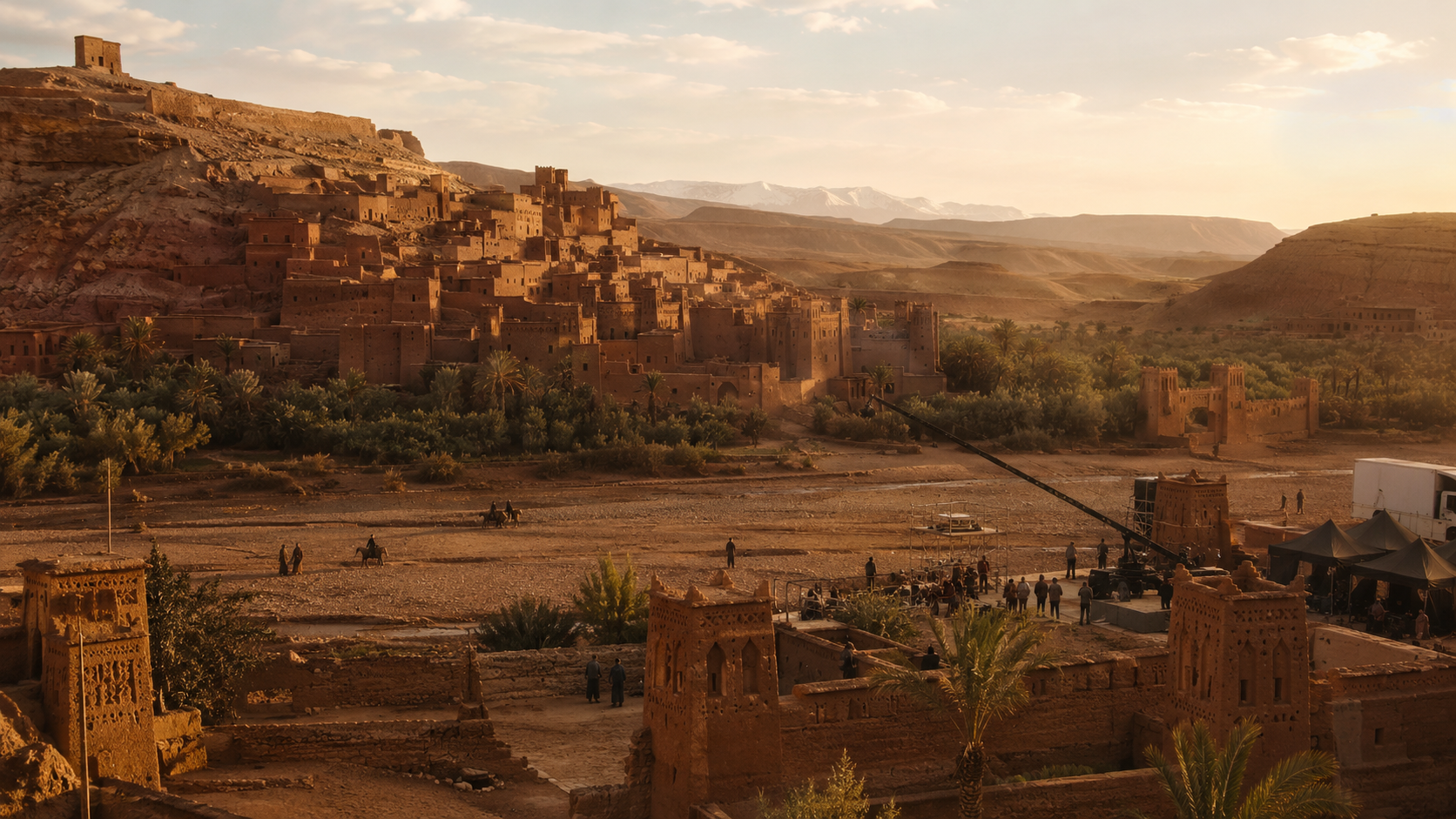
Aït Benhaddou became the ancient city of Troy.
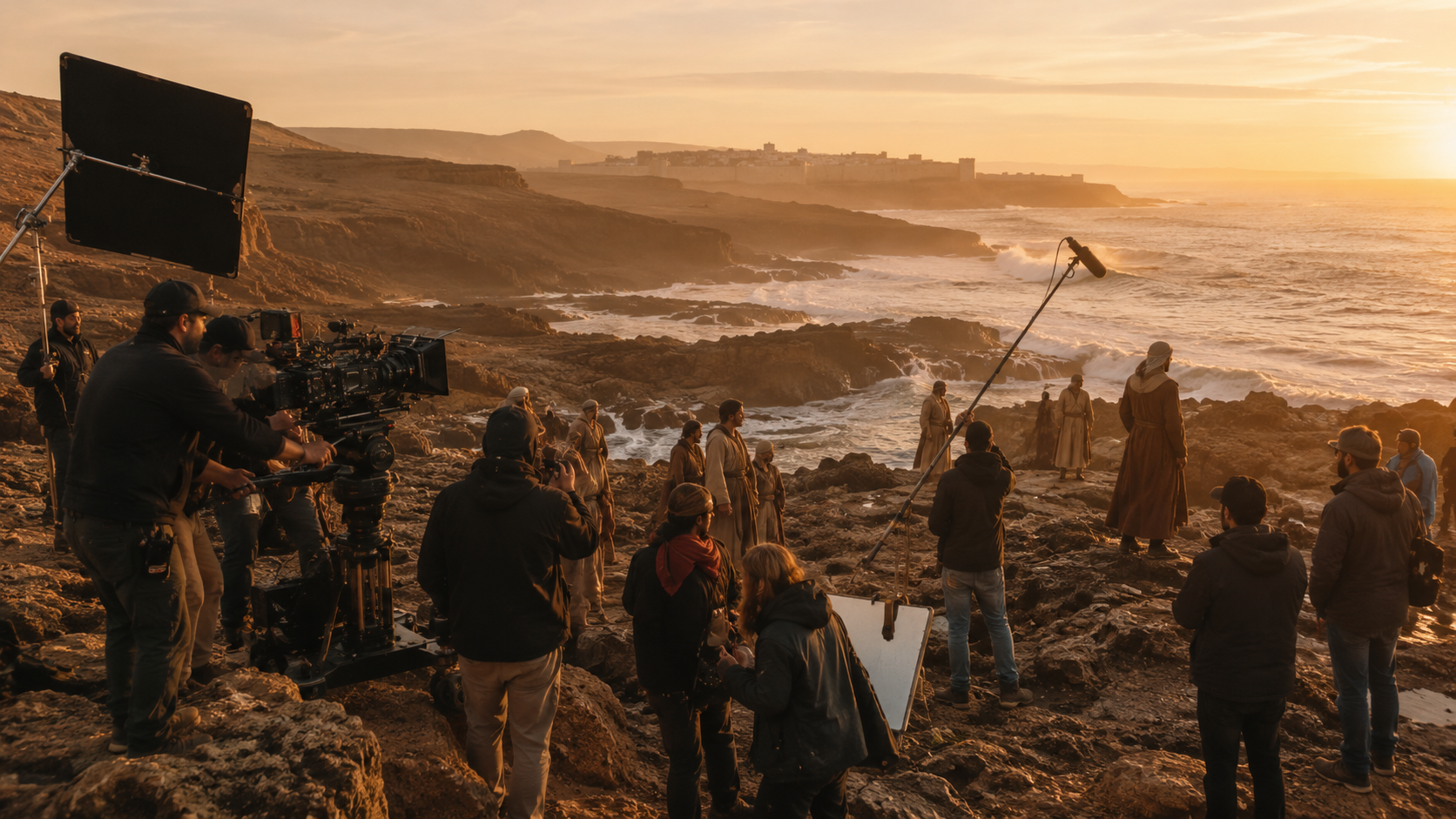
Essaouira provided the Atlantic shoreline used for major scenes involving the Trojan Horse and Odysseus’s departure.
Other parts of Morocco supported a production filmed across several countries and built around real locations rather than predominantly digital environments.
This is valuable global exposure.
But exposure alone is not an economic strategy.
The larger opportunity is to convert Morocco’s appearance in one of the year’s biggest films into tourism spending, production contracts, technical careers and a stronger domestic cinema industry.
The Odyssey proves again that Morocco can provide the landscapes required by the world’s most ambitious filmmakers.
The next test is whether Morocco can capture more of the value created around them.
Morocco Did Not Simply Provide A Background
Major international productions do not select locations only because they are visually attractive.
They also require access.
Security.
Equipment.
Construction capacity.
Experienced crews.
Transport.
Accommodation.
Permits.
Local coordination.
The ability to move hundreds or thousands of people through a demanding production schedule.
Morocco’s role in The Odyssey therefore represents more than the use of a beach or historic village.
Aït Benhaddou was transformed into Troy.
Additional structures were reportedly created around the fortified landscape to expand the scale of the ancient city.
Essaouira supported one of the film’s major coastal sequences, involving the Trojan Horse and large numbers of performers.
These scenes required organisation beyond what audiences see on screen.
Local technicians, drivers, construction teams, accommodation providers, catering businesses, security services and production coordinators all became part of the economic chain.
The location supplied the image.
The surrounding ecosystem made the image possible.
That distinction explains why Morocco continues to attract major productions while other countries with equally impressive landscapes struggle to compete.
Nolan’s Preference For Reality Increased Morocco’s Value
Christopher Nolan is known for using practical filmmaking whenever possible.
For The Odyssey, that approach carried unusual importance.
The film was shot across real beaches, caves, coastlines, castles and difficult natural environments. Large-scale scenes depended on physical locations, practical sets and real performers rather than relying entirely on digital reconstruction.
This increased the commercial value of Morocco’s landscapes.
A digitally created Troy could have been produced inside a studio almost anywhere.
A physical Troy required a location capable of carrying the scale and atmosphere of an ancient civilisation.
Aït Benhaddou provided that visual credibility.
Its earthen architecture, surrounding terrain and historic character allowed the production to create a world that feels physically inhabited rather than digitally inserted.
Essaouira offered a coastline capable of supporting both narrative and spectacle.
Morocco was therefore not selected merely because production could be cheaper.
It was selected because its physical environment contributed something difficult to reproduce elsewhere.
That is a stronger competitive position.
Low-cost locations can be replaced.
Distinctive visual assets supported by professional production capacity are harder to substitute.
The Box Office Multiplies The Exposure
A production creates local economic activity while filming takes place.
A global box-office success creates another layer of value after filming ends.
Approximately $640 million in worldwide ticket sales means that millions of people have already encountered Morocco through the film.
Many will not immediately recognise every location.
But landscapes can generate curiosity even before audiences know where they were filmed.
Search activity increases.
Travel publications begin identifying the sites.
Social-media users share location comparisons.
Tour operators develop themed itineraries.
Hotels and destination businesses begin using the association in their marketing.
This is where cinematic visibility can become tourism demand.
A location used in an unsuccessful film may disappear quickly from public attention.
A location used in a major international blockbuster can remain culturally visible for years.
The commercial life of The Odyssey will also extend beyond cinemas.
Digital release, streaming, television, awards coverage and continued discussion around Christopher Nolan’s work can repeatedly return the Moroccan locations to global audiences.
The value is therefore not limited to one opening weekend.
Morocco now has a long-term tourism asset connected to one of cinema’s most recognisable directors.
Aït Benhaddou Can Become More Than A Familiar Set
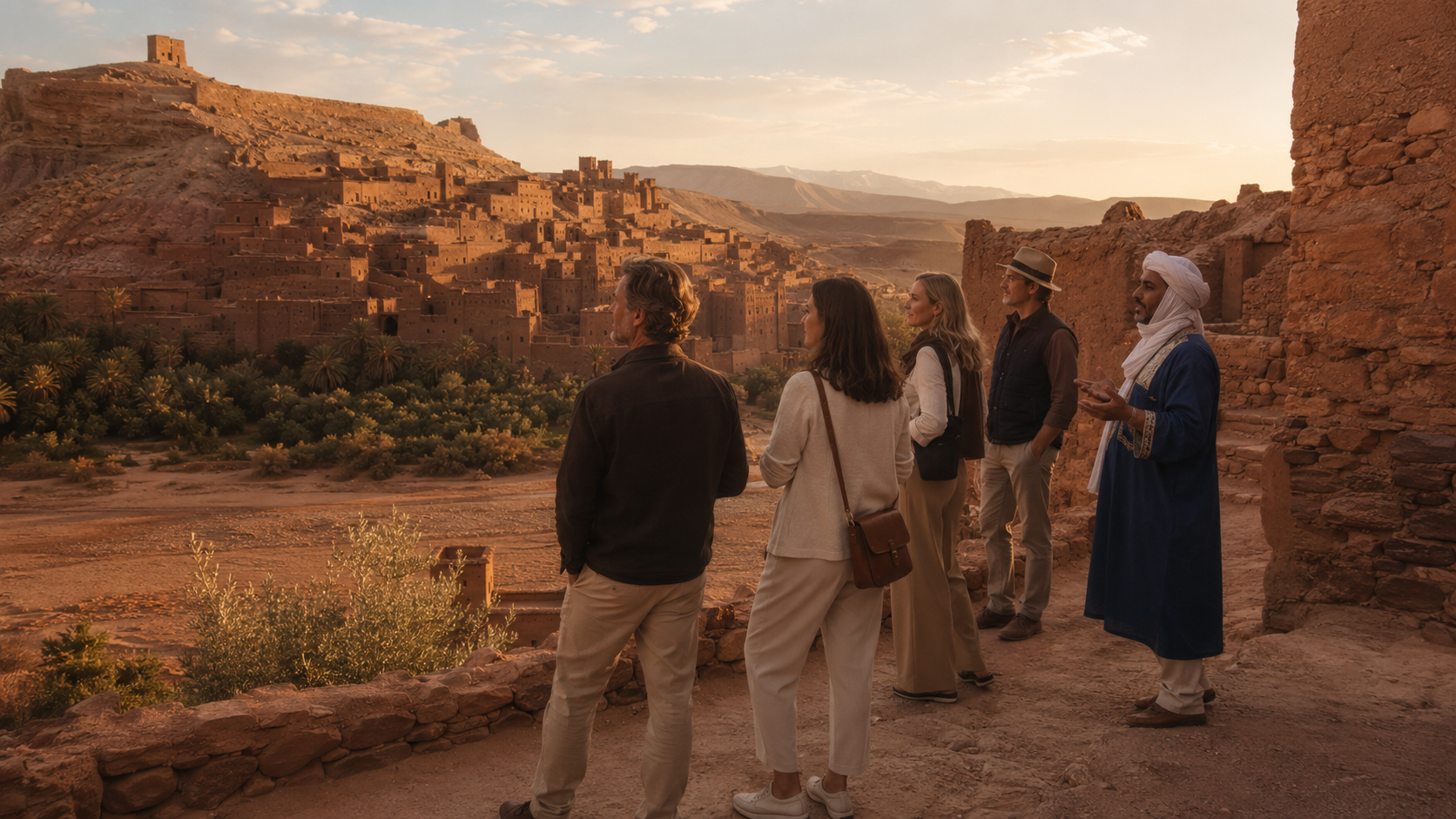
Aït Benhaddou already has an extraordinary cinematic history.
Its architecture and surrounding landscapes have appeared in numerous international productions.
That familiarity creates both opportunity and risk.
The opportunity is clear.
The site has become one of the most recognisable filming locations in North Africa.
Visitors can connect the physical place with films and television productions they already know.
The risk is that repeated use produces recognition without enough local economic capture.
Tourists may visit briefly, take photographs and leave.
Small businesses may compete mainly through low-value souvenir sales.
Local residents may receive limited benefit compared with the global commercial value generated by the site’s image.
The Odyssey offers an opportunity to reconsider that model.
A stronger visitor experience could include guided film-history routes, exhibitions about production design, restored set elements, professional interpretation and partnerships with studios or distributors where rights permit.
The objective should not be to turn a historic site into a commercial theme park.
Its heritage value must remain central.
But cinematic history is now part of that heritage.
Presenting it professionally can increase visitor spending, extend stays and create work for guides, researchers and cultural businesses.
Essaouira Gains A New Global Story
Essaouira already possesses a strong international identity.
It is associated with music, architecture, surfing, coastal culture and a distinctive urban atmosphere.
The Odyssey adds another layer.
The city’s shoreline became part of a globally recognised myth presented through one of the world’s largest cinematic productions.
This creates a powerful tourism narrative.
Visitors can stand in the physical landscape used to represent the aftermath of Troy and the beginning of Odysseus’s journey.
The connection combines cinema, literature, history and travel.
That is commercially valuable because modern visitors increasingly seek stories rather than only locations.
A beach becomes more memorable when connected to a scene.
A historic building becomes more valuable when visitors understand how it was transformed for production.
A city becomes easier to market when it carries several identities at once.
Essaouira should not allow the opportunity to remain limited to scattered online articles identifying the filming location.
Tourism institutions, guides and local businesses can integrate the connection into a wider destination strategy.
The strongest approach would connect the film with Essaouira’s existing cultural identity rather than replace it.
Film Tourism Requires A Product
Global exposure does not automatically create tourism revenue.
Potential visitors need practical reasons and clear ways to act.
They need to know where filming occurred.
They need transport.
Guides.
Accommodation.
Reliable information.
A coherent itinerary.
A cinematic route connecting Marrakech, Aït Benhaddou, Ouarzazate and Essaouira could encourage travellers to spend several additional days in Morocco.
The route could combine film locations with architecture, local cuisine, landscapes and production history.
This would distribute value across several destinations.
It could also attract travellers outside the traditional peak season.
Film enthusiasts may travel because of the production rather than climate or beach demand.
The same model can connect The Odyssey with Morocco’s wider screen history.
Instead of promoting each film separately, Morocco can present itself as a destination where major cinematic worlds were created.
That produces a stronger national identity.
One blockbuster generates temporary attention.
A permanent film-tourism network converts decades of production into a durable economic product.
Local Crews Are The Hidden Export
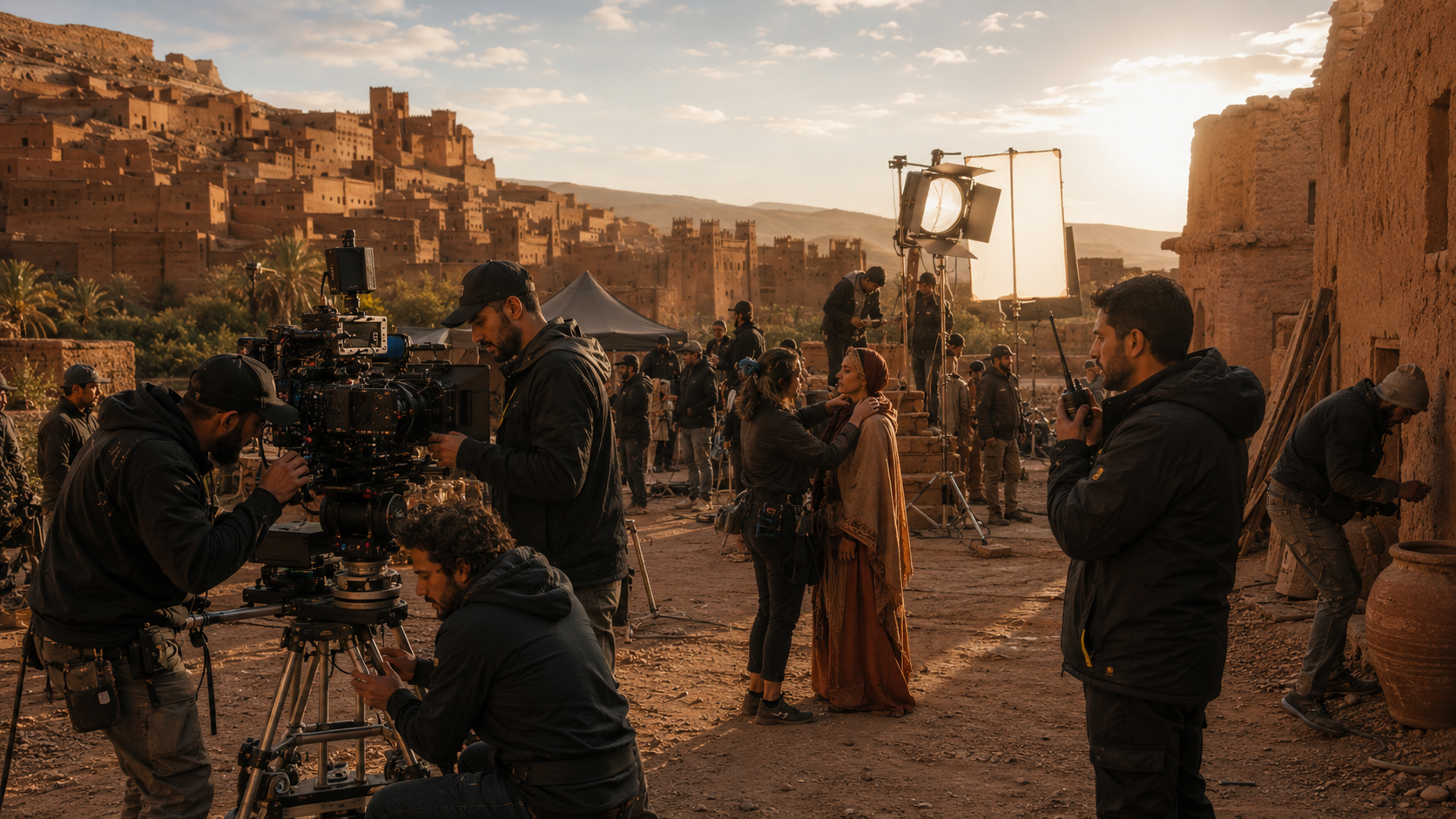
The most visible Moroccan asset in an international production is the landscape.
The most economically important asset may be the workforce.
Every major project allows Moroccan technicians and production professionals to gain experience under demanding international standards.
Camera support.
Set construction.
Costume work.
Makeup.
Lighting.
Transport.
Location management.
Security.
Catering.
Crowd coordination.
Post-production services.
These skills can become exportable.
A technician who works successfully on a Christopher Nolan production gains experience that can strengthen future international opportunities.
A Moroccan production company that meets a major studio’s requirements gains commercial credibility.
A construction team capable of transforming Aït Benhaddou into Troy can compete for other complex productions.
This is how location work becomes industrial capacity.
But the process needs structure.
Experience should not remain concentrated among a limited group of established professionals.
Training programmes should allow younger Moroccans to enter the industry.
Skills gained on international productions should be documented and certified.
Local companies should have pathways to move from subcontracting towards higher-value responsibilities.
Morocco’s greatest cinematic export may eventually be the people capable of building cinematic worlds.
Temporary Employment Must Become Permanent Capability
Large productions create intense periods of employment.
Hotels fill.
Vehicles are rented.
Extras are recruited.
Sets are constructed.
Local spending increases.
Then the production leaves.
The economic danger is that activity disappears with it.
Morocco needs to convert temporary production demand into permanent business capability.
A company purchasing equipment for one major film should be able to use it on several subsequent projects.
Workers trained for one production should move into another without long periods of unemployment.
Studios and suppliers need a predictable project pipeline.
This requires more consistent filming activity across the year.
It also requires stronger domestic production.
International projects alone may not provide sufficient continuity.
A healthy screen economy combines large foreign productions with Moroccan films, series, advertising, documentaries and digital content.
Foreign investment provides scale and technical experience.
Domestic production provides continuity and intellectual-property ownership.
Both are necessary.
Morocco Must Move Up The Production Chain
Location services create value.
But they represent only one part of the film economy.
The highest returns often come from ownership.
The company financing the project controls the commercial asset.
The studio owns distribution rights.
Producers retain long-term participation.
Characters, formats, sequels and licensing can continue generating revenue after filming has ended.
Morocco currently benefits from hosting major productions.
The larger ambition should be participating more deeply in their financing, production and intellectual property where commercially realistic.
Moroccan companies could become co-production partners.
Local producers could develop projects designed for international distribution.
Studios could provide more advanced technical and post-production services.
Investment funds could support content with global potential.
Writers and directors could develop original Moroccan stories capable of travelling internationally.
The objective is not to demand ownership of foreign projects merely because they film in Morocco.
It is to use the capabilities built around those projects to create Moroccan-owned content.
Hosting Troy is valuable.
Building stories that Morocco itself can own would create another level of economic power.
Ouarzazate Must Remain Competitive
Ouarzazate has long been associated with Morocco’s international film industry.
Its studios, desert landscapes, technical experience and production history give it a recognised position.
But global competition is intensifying.
Countries are expanding studio capacity.
Governments are introducing tax incentives.
Virtual-production technology allows filmmakers to create locations without travelling as extensively.
Other destinations are improving their local crews and permitting systems.
Past success cannot guarantee future contracts.
Ouarzazate must continue upgrading.
Studios need modern sound stages, equipment and digital infrastructure.
Transport and accommodation must meet the expectations of large productions.
Technical education needs to follow changes in filmmaking.
Energy reliability, internet connectivity and post-production capability are becoming more important.
The region should also strengthen its connection with Marrakech, Essaouira and other locations used by major productions.
Morocco competes most effectively when it offers a complete national network rather than isolated sites.
Incentives Must Produce Measurable Returns
International productions often compare countries partly through financial incentives.
Rebates can reduce the net cost of local spending and make one destination more competitive than another.
These incentives can be economically justified when they attract spending that would otherwise occur elsewhere.
But public support should produce measurable national value.
How much did the production spend locally?
How many Moroccan workers were employed?
How many days of hotel occupancy were created?
Which local suppliers received contracts?
What technical knowledge remained after filming?
How much global tourism exposure was generated?
Did the production return for additional work?
These indicators help determine whether incentives are functioning as investment policy or merely reducing the cost for foreign studios.
The strongest system rewards real local expenditure, employment and training.
It should also remain predictable.
Film productions plan years in advance.
Unclear procedures or delayed reimbursement can weaken Morocco’s attractiveness regardless of the landscapes available.
Intellectual Property Still Determines The Largest Value
The economic difference between hosting a film and owning a film is substantial.
Morocco received production spending from The Odyssey.
Universal Pictures and the project’s producers receive the larger commercial return from global ticket sales, future distribution and licensing.
That is normal.
They financed and carried the risk of the production.
But the contrast reveals where Morocco’s domestic industry still has room to grow.
Moroccan filmmakers need stronger access to development funding.
Writers need time and professional support before production begins.
Producers need capital capable of carrying projects through filming, post-production and distribution.
Actors need international representation.
Local films require marketing budgets strong enough to reach audiences.
Distribution must be planned before the camera starts rolling.
A country can host hundreds of foreign productions while still struggling to export its own stories.
The true sign of cinematic maturity will be Morocco’s ability to do both.
The Global Success Should Strengthen Moroccan Cinema
The attention surrounding The Odyssey can be used to promote Morocco as a filming destination.
It should also create momentum for the domestic film sector.
Young filmmakers can see that Moroccan locations are capable of carrying the visual scale of a global blockbuster.
The next question is whether they can access the tools required to use those same landscapes for their own work.
International productions can create training placements.
Studios can support apprenticeship programmes.
Foreign and Moroccan filmmakers can collaborate through structured development programmes.
Equipment and facilities used for large productions can become available to domestic projects under commercially sustainable arrangements.
The relationship should not be one-directional.
Morocco provides landscapes, labour and services.
International production should also help deepen Morocco’s creative capability.
This is how a filming destination becomes a film industry.
Global Marketing Must Begin Immediately
The strongest period for capturing film-tourism interest begins while the movie remains culturally dominant.
Audiences are currently searching for the film’s locations.
Travel publications are identifying where scenes were shot.
Social media is circulating visual comparisons.
This attention will eventually decline.
Morocco’s tourism and film institutions should therefore act quickly.
The Moroccan locations should be presented clearly through high-quality international content.
Information should be available in English, French, Spanish and other relevant languages.
Travel itineraries should connect the locations realistically.
Hotels and tour operators should be able to build packages around them.
Local guides should receive accurate information about the production.
Marketing should remain factual and avoid claiming scenes or locations that cannot be verified.
Credibility matters.
Film fans often research production details closely.
A clear and authoritative Moroccan narrative would prevent the country’s role from being defined entirely by foreign travel platforms.
Heritage Protection Must Remain Central
Cinematic success can increase pressure on historic and natural sites.
More visitors may create congestion.
Informal construction can alter landscapes.
Fragile architecture may face physical damage.
Waste and traffic can weaken the visitor experience.
Aït Benhaddou is not merely a film set.
It is a living cultural and architectural site with significance independent of cinema.
Essaouira’s coastline is not valuable only because Christopher Nolan filmed there.
Tourism growth must therefore be managed carefully.
Visitor routes should protect sensitive areas.
Local residents should participate in planning.
Revenue should contribute to maintenance.
Commercial use should respect heritage standards.
The most successful film-tourism destinations preserve the qualities that made them attractive to filmmakers in the first place.
Overexploitation would reduce both cultural and commercial value.
The $640 Million Question
The Odyssey has already generated approximately $640 million worldwide.
Morocco will not receive a direct share of that global box office simply because part of the film was shot in the country.
But it can capture a wider economic effect.
More productions.
More visitors.
More technical careers.
More demand for local suppliers.
More international confidence in Moroccan locations.
More attention for Aït Benhaddou, Essaouira and the country’s wider cinematic landscape.
The scale of that effect depends on what happens after the cameras leave and the film enters cinemas.
Morocco has repeatedly demonstrated that it can help international filmmakers create ancient cities, distant worlds and global spectacles.
The next stage is to build an industry capable of retaining more of the skills, businesses and intellectual value generated around those productions.
Christopher Nolan used Morocco to help create Troy.
The global audience has now seen the result.
Morocco’s opportunity is to ensure that the journey does not end on the screen.