
Europe’s winter plate has a Moroccan problem.
Not because Morocco is failing.
Because Morocco has become too important to ignore.
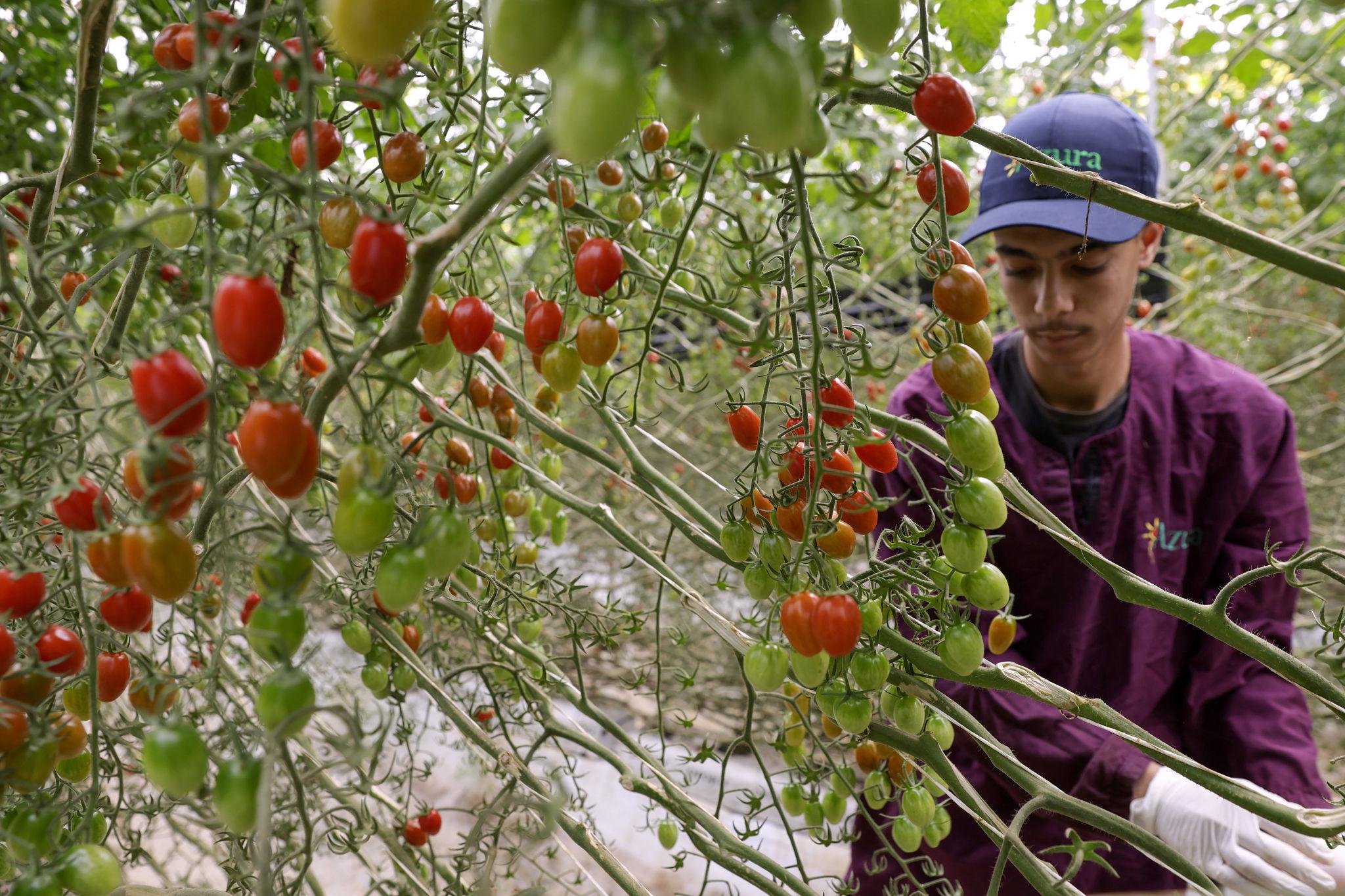
Tomatoes, berries, peppers, citrus and other fresh produce moving from Moroccan farms to European supermarkets have turned the Kingdom into one of the continent’s most strategic food suppliers. The model is simple from the consumer side: fresh vegetables in winter, stable supermarket shelves, competitive prices and year-round availability.
But from the Moroccan side, the equation is more complicated.
Water.
Heat.
Labour.
Disease.
Export standards.
Local prices.
And a question that is becoming harder to avoid.
How much water should Morocco spend to feed Europe?
Water-Stressed Plate Becomes A Moroccan Food Question
The Water-Stressed Plate matters because Morocco’s food-export success now sits inside a climate dilemma.
For years, Moroccan agriculture built a powerful position in European fresh produce. The country’s proximity to Europe, winter production window, greenhouse capacity and logistics have made it a serious competitor to Spain, the Netherlands and Turkey in several categories.
But the 2025-2026 tomato season shows the pressure.
FreshPlaza reported that Moroccan tomato exports fell by 11%, from 620,000 tonnes to 549,000 tonnes, according to data presented by Morocco Foodex at the Morocco Tomato Conference.
That decline is not just a tomato story.
It is a warning about the cost of climate-stressed agriculture.
Morocco Still Has Market Power
The decline does not erase Morocco’s strength.
Médias24 reports that Morocco remains the third-largest tomato supplier in the world, despite the 11% drop in exports. It also notes that global tomato production is expected to rise from 197 million tonnes in 2025 to 205 million tonnes in 2028, while Morocco’s proximity to Europe gives it a transport-emissions advantage over more distant competitors.
That means Morocco is not losing relevance.
It is becoming more exposed because of its relevance.
When a country becomes a key supplier, every disruption matters more. A heatwave, virus, water restriction or logistics shock in Morocco can influence availability and pricing in European markets.
The stronger the export position, the higher the responsibility.
Morocco has moved from being an alternative supplier to being part of Europe’s fresh-food infrastructure.
Europe Depends On Southern Farms
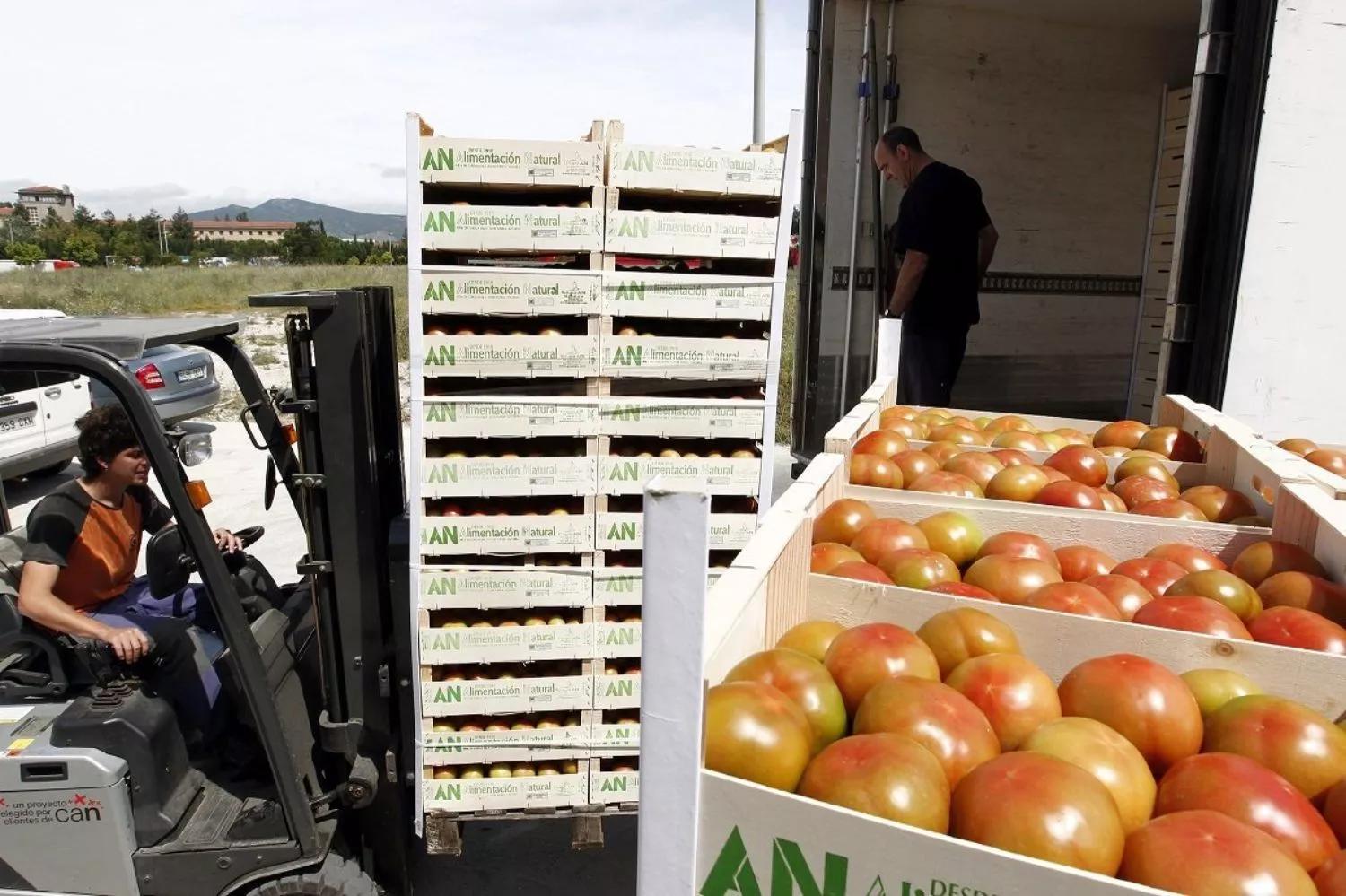
Europe’s food system increasingly depends on southern production zones.
In winter and early spring, countries such as Morocco, Spain, Portugal, Italy and Greece supply fresh vegetables and fruit to northern markets when local production is limited. Reuters, via the Financial Times, described Spain, Portugal, Morocco and parts of Italy and Greece as Europe’s winter “pantry,” supplying tomatoes, cucumbers, avocados, peppers, berries and citrus fruit northwards.
That phrase matters.
A pantry is something people expect to be full.
But climate change is making that pantry less predictable.
Floods in one region, drought in another, heat stress in another and disease pressure in greenhouse zones can quickly reduce supply. European consumers may still see tomatoes on shelves, but the system behind those tomatoes is becoming more fragile.
Morocco is inside that fragility.
Water Is The Hidden Export
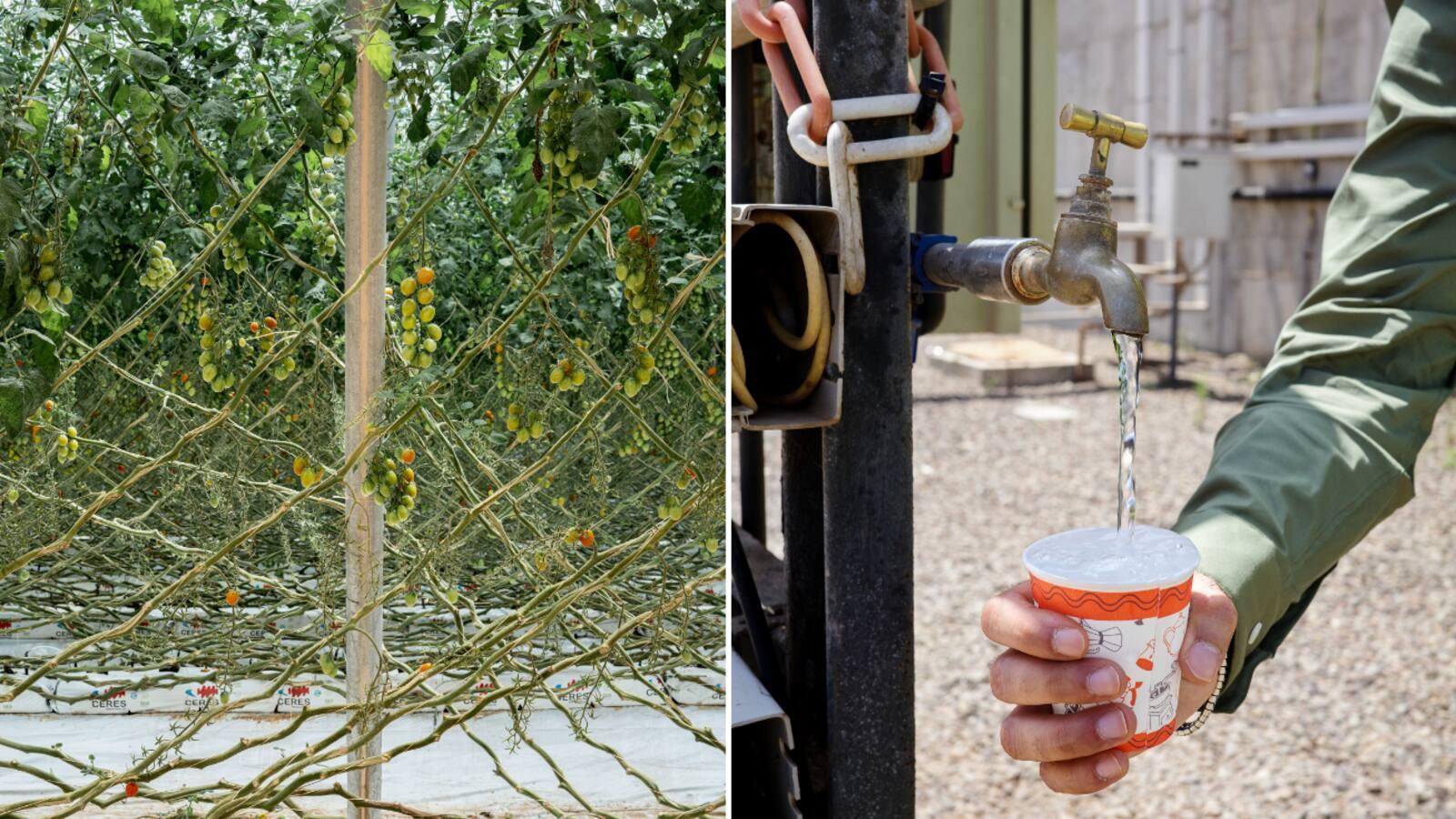
Every tomato exported from Morocco carries something invisible.
Water.
This is why the debate is becoming sensitive. Fresh produce exports generate revenue, jobs, logistics activity and foreign currency. They support farmers, packing stations, transport companies, exporters and regional economies.
But in a water-stressed country, every export crop also raises a resource question.
Is Morocco exporting food?
Or is it exporting water embedded inside food?
That question is uncomfortable because both sides are true.
Agriculture supports livelihoods.
Agriculture also consumes water.
The challenge is not to demonise exports.
The challenge is to decide which exports make sense under climate pressure, which technologies reduce water intensity and which regions can support intensive farming without destroying long-term resilience.
The Greenhouse Economy Is A Strength And A Risk
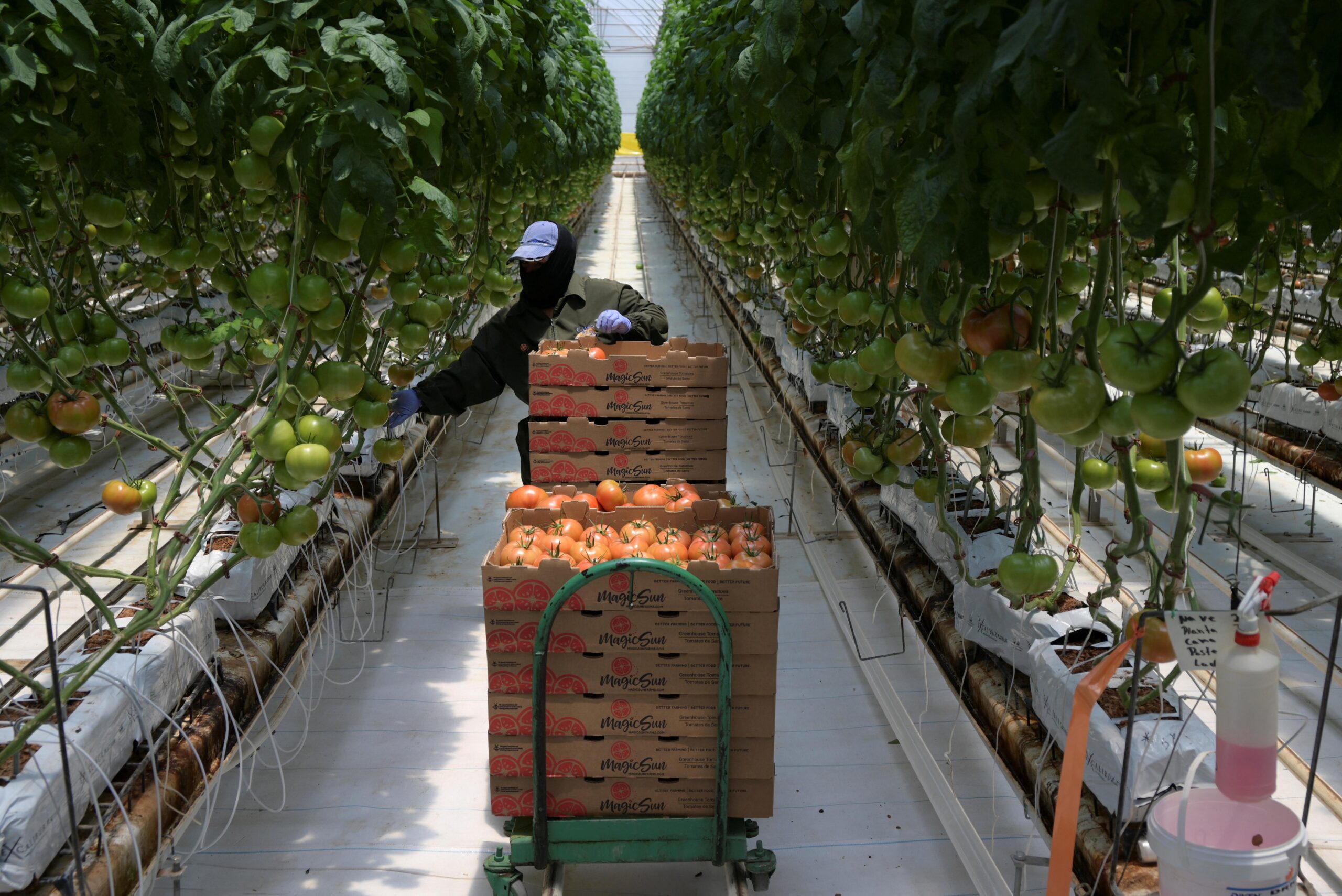
Reuters reported that more than 24,000 hectares of greenhouse farming produce more than four fifths of Morocco’s fruit and vegetable exports, contributing to a 3.6% rise in agricultural exports to $4.5 billion last year.
That is a powerful number.
Greenhouses give Morocco control, scale and export consistency. They allow intensive production, protect crops, create employment and support supply contracts with demanding foreign buyers.
But they also concentrate risk.
If a greenhouse region faces water stress, virus pressure, labour shortages or input-cost inflation, the effect can move quickly through the export chain. Plastic-covered agriculture may look controlled from the outside, but it remains exposed to climate and resource constraints.
The greenhouse is not separate from the environment.
It depends on it.
Tomato Disease Adds Pressure
The tomato sector is not only dealing with water.
Afrik and other agricultural outlets report that Morocco’s tomato exports have been hit by a combination of factors, including climatic constraints, logistics, regulatory pressure and the spread of Tomato Brown Rugose Fruit Virus, known as ToBRFV.
That is important because plant disease changes the economic equation.
A producer can manage price fluctuations.
A producer can manage transport delays.
But a virus that affects yields and quality directly threatens supply. It can increase costs, reduce export volumes and force stricter controls across nurseries, farms and packing stations.
For European buyers, this means Moroccan supply is not guaranteed.
For Moroccan growers, it means export success requires stronger biosecurity.
The tomato business is no longer only about growing.
It is about managing biological risk.
European Standards Are Getting Tougher
Moroccan exporters also face a changing regulatory environment.
Médias24 notes that the European Carbon Border Adjustment Mechanism will gradually enter its payment phase between 2026 and 2034, creating a major issue for Moroccan exporters, while Morocco’s geographic proximity to Europe can help reduce transport-related emissions compared with distant competitors.
The direction is clear.
European buyers will increasingly care about environmental footprint, water use, carbon intensity, packaging, traceability and phytosanitary compliance.
This creates both pressure and opportunity for Morocco.
Pressure because compliance costs rise.
Opportunity because Morocco can position itself as a nearer, lower-transport-emission supplier if it improves water and production sustainability.
Europe wants fresh food.
But Europe also wants cleaner supply chains.
Morocco must deliver both.
The Local Price Question Cannot Be Ignored
Export success can create tension at home.
When Moroccan produce flows to Europe, local consumers may ask why vegetables become expensive in domestic markets. The question is not always technically simple. Prices depend on season, supply, quality, transport, middlemen, weather, export contracts and local demand.
But politically, the perception is simple.
If Moroccan tomatoes are feeding Europe while Moroccan households face higher prices, frustration grows.
That is the food-policy dilemma.
Export agriculture brings income.
Domestic food affordability protects social stability.
A serious strategy must balance both.
Morocco cannot build a strong export model while ignoring the Moroccan dinner table.
Labour Is Becoming Part Of The Model
The Moroccan farm-export system also depends on labour.
Reuters reported that Moroccan farms are increasingly turning to migrants from sub-Saharan Africa to plug agricultural labour shortages, as rural Moroccans move toward city jobs in construction and services.
That changes the social structure of agriculture.
Greenhouse exports are not only about water and trade. They are also about who works the fields, under what conditions, for what wages and with what rights.
If Morocco wants to be a premium supplier to Europe, labour conditions will eventually become part of the product story. European consumers and retailers are increasingly sensitive to supply-chain ethics.
A tomato is no longer only judged by taste and price.
It may also be judged by how it was produced.
Morocco’s Competitive Advantage Is Real
Morocco still has strong advantages.
It is close to Europe.
It has a strong agricultural export base.
It has experienced growers.
It has ports and logistics links.
It has greenhouse expertise.
It has a winter production window.
It has established relationships with European buyers.
These advantages do not disappear because one season becomes difficult.
But they must be protected.
The next stage of Morocco’s fresh-produce strategy cannot depend only on expansion. It must depend on efficiency, sustainability and resilience.
More greenhouses are not automatically better.
Better water productivity may matter more.
Desalination Becomes Part Of The Food Chain
Water strategy is now directly linked to food exports.
Reuters reported that Morocco is accelerating investment in desalination plants, water-transfer projects and dams to mitigate prolonged drought and meet rising demand from agriculture and cities. It also reported that Morocco aims to supply 60% of drinking water from treated seawater by 2030, leaving dam water for inland regions.
That is a major shift.
If desalination supports urban water security and frees other resources for agriculture, it can reduce pressure. But desalinated water is not free. It requires investment, energy, infrastructure and careful pricing.
For farmers, water cost becomes a competitiveness issue.
For policymakers, water allocation becomes a national strategy.
For consumers, water stress eventually appears in prices.
The Moroccan tomato is now connected to desalination economics.
Europe Also Has A Water Problem
Morocco is not alone.
Southern Europe faces its own climate pressures. Spain, Italy, Portugal and Greece have all experienced drought, heat and agricultural stress. That means Morocco’s role may become even more important as European production zones become less reliable.
But this also creates a warning.
If both sides of the Mediterranean are water stressed, the entire fresh-produce model needs adaptation.
Europe cannot simply outsource winter vegetables to another dry region without confronting the resource cost.
And Morocco cannot assume European demand justifies unlimited water use.
The Mediterranean food system is entering a new era.
Climate will decide more than trade agreements.
Farmers Need A Better Value Equation
The future cannot be only “export more.”
It must be “earn more per unit of water.”
That means higher-value varieties, better irrigation, stronger disease control, smarter logistics, reduced waste, improved packaging, premium certifications, better contracts and more local processing where appropriate.
If Morocco uses scarce water, the value captured must be high enough to justify the use.
Low-margin water-intensive exports will become harder to defend.
High-value, efficient and sustainable exports will remain strategic.
This is the real transformation.
The question is not whether Morocco should export food.
The question is what kind of food-export model Morocco wants.
The Domestic Market Needs Protection Too
Morocco’s food strategy should not treat the domestic consumer as secondary.
A country can be a strong exporter and still protect local affordability, but that requires planning. Better market monitoring, transparent pricing, reduced waste, improved cold chains, stronger wholesale regulation and flexible export management during shortages can all help.
The goal should not be to punish exporters.
It should be to avoid social imbalance.
When export agriculture succeeds, Moroccan households should also feel some benefit through jobs, income, infrastructure and stable food access.
If the country only sees exports while local prices rise, the model loses legitimacy.
Food policy must serve both foreign buyers and Moroccan families.
The European Buyer Must Pay For Sustainability
European supermarkets often demand low prices, perfect appearance and year-round supply.
But if they also want sustainable water use, traceability, labour standards and lower environmental impact, they must accept that the cheapest model may not survive.
Sustainability has a cost.
If European buyers push prices too low, the pressure lands on Moroccan growers, workers and water systems. A serious partnership should reward better production, not simply demand it.
This is where Morocco must negotiate from strength.
The country is not just a supplier begging for access.
It is a strategic food partner.
Strategic partners should not carry all the cost alone.
The Tomato Becomes A Climate Indicator
The tomato is a simple product.
That is why it is powerful.
Everyone understands it.
It appears in salads, sandwiches, sauces, tagines, supermarket displays and restaurant plates. When tomatoes become expensive, scarce or controversial, people notice.
In Morocco, the tomato can now function as a climate indicator.
If exports fall, it may signal water stress, disease pressure, rising costs or regulatory change.
If prices rise, it may signal pressure between domestic demand and foreign sales.
If Europe complains, it may signal trade tensions.
A tomato is no longer just a tomato.
It is a small red signal from a changing food system.
Morocco Needs A Smarter Food Narrative
MTD should not tell this story as anti-export.
That would be too simple.
Morocco’s agricultural exports are a national strength. They create jobs, integrate the country into global markets and show that Moroccan producers can compete internationally.
But MTD also should not tell this story as blind celebration.
That would be too weak.
The smarter narrative is this: Morocco has built a powerful food-export machine, but climate pressure now requires a more disciplined model.
Water must be priced correctly.
Export value must rise.
Local consumers must be protected.
European buyers must share sustainability costs.
Farm workers must be treated as part of the system.
This is the adult conversation.
The Bottom Line
The Water-Stressed Plate is becoming one of Morocco’s most important food stories.
Moroccan tomato exports fell 11% in the 2025-2026 campaign, from 620,000 tonnes to 549,000 tonnes, yet Morocco remains the world’s third-largest tomato supplier. At the same time, more than 24,000 hectares of greenhouse farming produce over four fifths of Morocco’s fruit and vegetable exports, even as the country faces serious water pressure.
That is the tension.
Morocco is feeding Europe.
But Morocco is also protecting its own future.
The country does not need to abandon agricultural exports.
It needs to make them smarter, more efficient, more valuable and more honest about water.
Europe’s winter plate may depend on Morocco.
But Morocco’s water cannot be treated as invisible.